
In German folklore, folk medicine and folk magic the apple does indeed play a fascinating, ambivalent dual role. It links the earthly living world with the otherworldly and magical realm.
Here is an overview of this dual nature of the apple in tradition:
The mundane side
Fertility, love and vitality.
As a symbol of life and renewal, the apple was deeply rooted in everyday life and the festive calendar: Love and wedding magic: Apples were regarded as tokens of love. A halved apple, eaten together by lovers, was believed to magically bind them to one another. During the "Mädchenwerfen"(girl-throwing) custom on festive days, throwing an apple to a girl signaled intentions to marry the one who catches the apple.
Life and birth customs
Upon the birth of a child a tree of life was often planted – usually an apple tree. If the tree thrived this reflected the good child’s health. The bathwater of newborns was sometimes poured onto the roots of an apple tree to bestow beauty and freshness upon the child.
Perchten and Christmas customs
The red apple on the Christmas tree (the ‘tree of paradise’) symbolised the life force in the midst of winter and was a direct precursor to today’s Christmas baubles.
The magical side
Transference, oracles and the spirit world
At the same time the apple was a powerful tool in defensive and harmful magic as well as during transitional periods (such as the Rauhnächte).
The transference of illnesses
In folk medicine it was believed that illnesses (such as warts, fever or gout) could be physically ‘wiped away’ or transferred. One would cut an apple in half rub the affected area with it and then bury the halves – usually in silence – beneath a tree or at a crossroads. As the apple rotted in the ground the illness would also fade away.
Divination and threshold magic
During the Rauhnächte apples were used for divination. A well-known custom involved peeling an apple in one go: the peel was thrown over the left shoulder so that the first letter of one’s future partner’s name could be read on the ground. Counting the apple seeds in turn served as an oracle for fertility or wealth.
Connection to the spirit world
The apple tree was regarded as the dwelling place of house spirits or elemental beings.
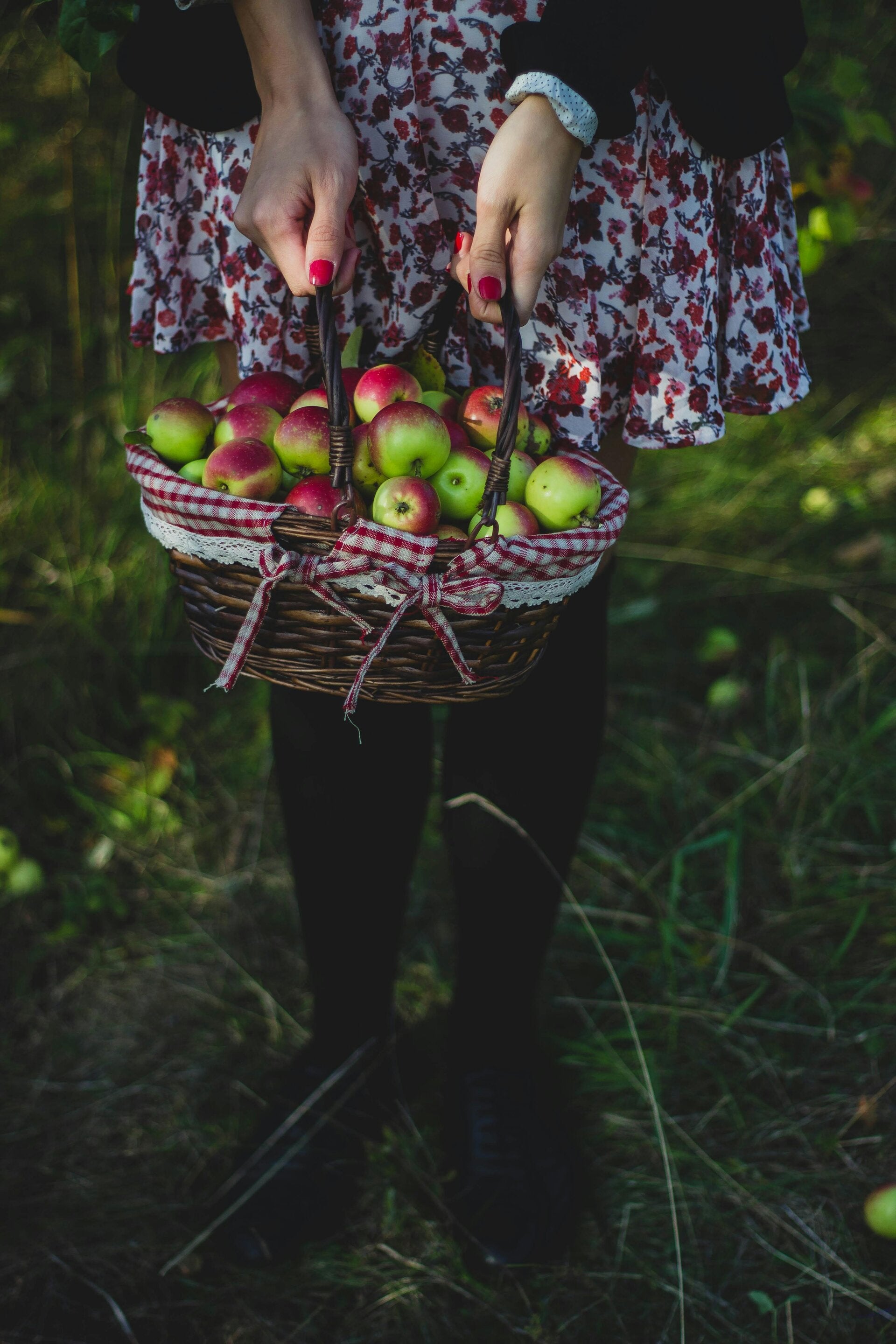
To appease them or to ask for protection for the farm and the harvest people made offerings to them – often the finest apples from the last harvest which were placed beneath the tree or left hanging from the branches.
Apple Ritual to cure a disease
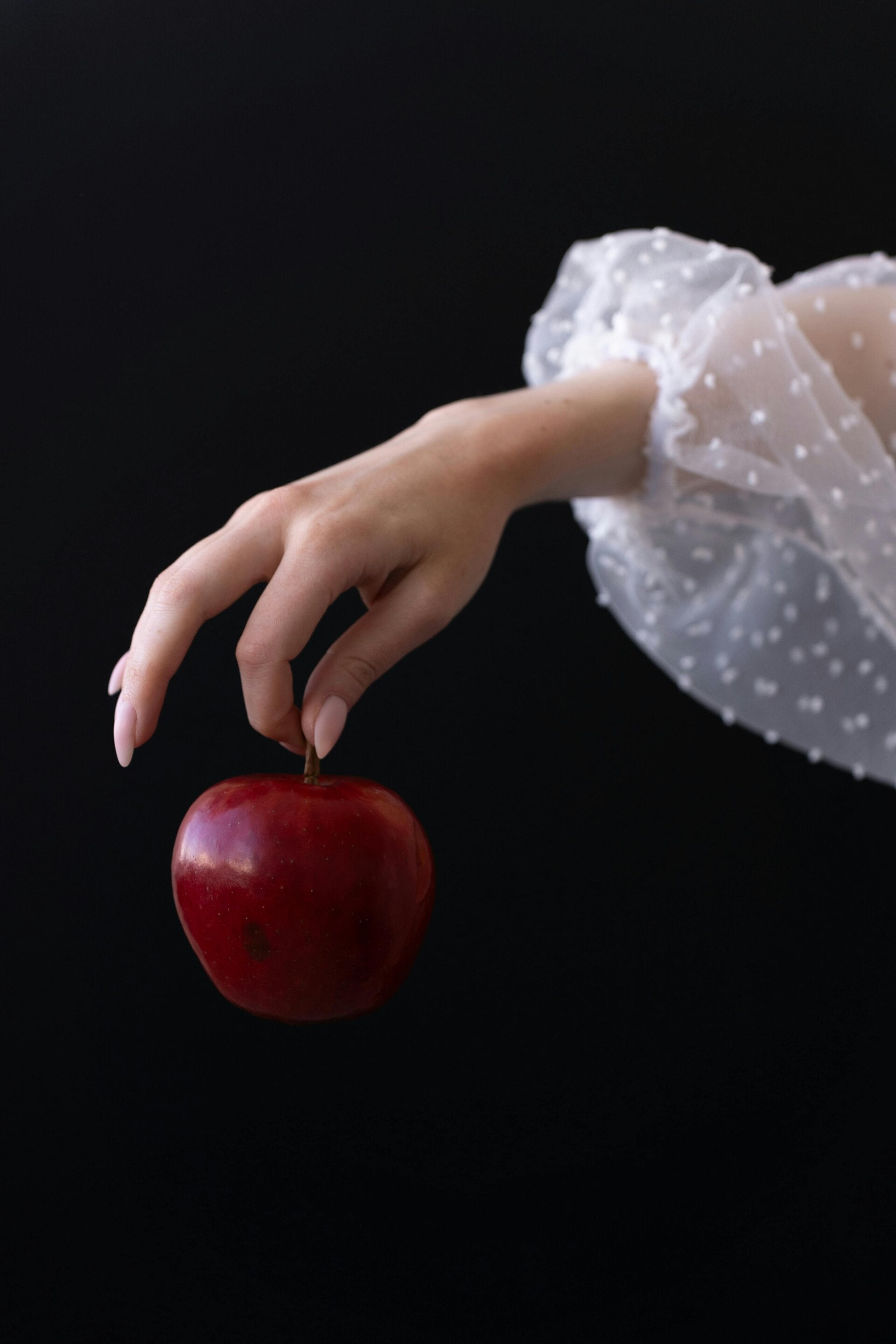
A historically very well-documented specific ritual of transference from German folk medicine concerns the ‘abbeten’ or transferring of warts onto an apple.
In folk magic the principle applied ‘Like cures like’ or ‘As the fruit rots in the ground, so does the suffering disappear’.
Here is the sequence of such a historical ritual as practiced over the centuries in various regional variations (recorded in southern Germany and the Alpine region)
Preparation & condition and timing
The ritual had to be carried out during the waning moon (sometimes at exactly midnight).
The waning moon symbolised the fading of the illness.
The procedure
The entire process – from cutting the apple to leaving the site – had to be carried out in absolute silence.
A single spoken word (apart from the magic formula) would have broken the spell.
The sequence of the rite
The person performing the ritual took a fresh, locally grown apple and cut it length ways
into two halves with a knife in silence.
The transfer
The cut surfaces of the two apple halves were then rubbed vigorously over the warts to be treated.
Whilst doing so one imagined that the juice and flesh were soaking up the ‘disease’ like a sponge.
The Reassembly:
The two halves were put back together so that they fitted perfectly.
They were often tied back together with a red woollen thread (red was considered a colour of protection and magic) or a thread of pure hemp.
The magic formula
Whilst tying them together a formula was recited softly to seal the intention.
A typical historical formula went:
„Apfel, ich gebe dir meine Plag’,
nimm sie mit dir in das Grab.
Wie du verfaulst in der Erd’,meine Haut wieder rein und gesund werd’.“
(Apple, I give you my affliction; take it with you to the grave.
As you rot in the earth may my skin become pure and healthy once more.)
The burial
The tied-up apple now had to be buried in a place where it could rot quickly.
Popular locations were:
1) Under the eaves of the house (where rainwater would quickly break it down).
2) Under an elderberry bush (which, in Germanic magic was regarded as a gateway to the underworld and the dwelling place of Frau Holle / Goddess Hel).
3) At crossroads
After burying the apple one had to turn back and walk home without looking back even once.
The magical principle behind it: The ritual was considered complete as soon as the apple had completely rotted and decomposed in the earth. To the same extent that the flesh of the fruit decayed.
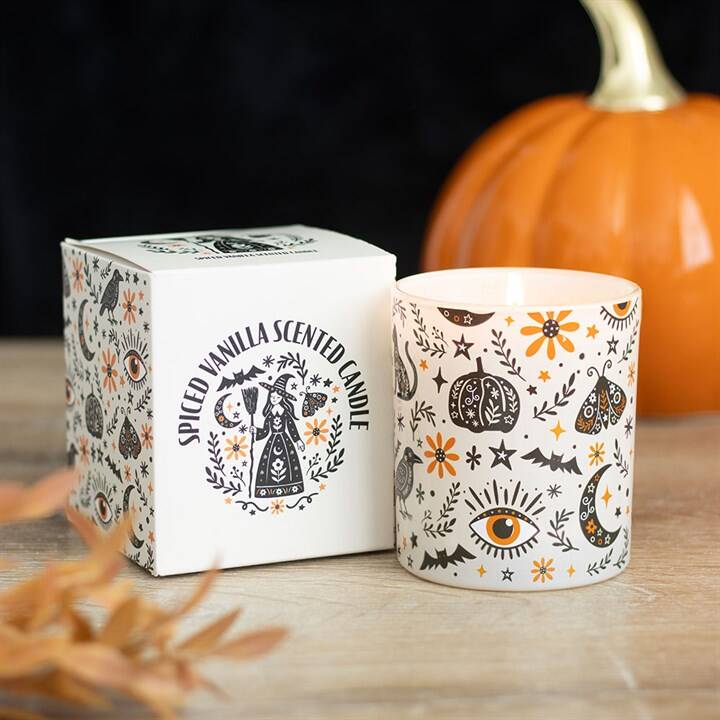
To enhance the warming, hearth-bound energy of traditional apple magic—especially seasonal autumn offerings, orchard blessings (Apfelbaumbesprechen) and love divinations—the The Frightful Folk Print Spiced Vanilla Scented Candle serves as an ideal ritual companion.
Elemental Harmony:
Vanilla and warm spices naturally align with the element of Fire and solar energy, balancing the Water and Venusian properties of the apple during spellwork.
Warmth & Attraction:
The rich, sweet scent of spiced vanilla helps draw positive intentions, making it an excellent catalyst when carving sweetening charms, performing love spells, or making harvest offerings to house spirits (Hauselementare).
Folk Aesthetic:
The haunting "Frightful Folk" artwork on the glass sets a traditional, witchy atmosphere for late-night divinations during threshold times like the Autumn Equinox or Samhain.
Set the Atmosphere for Your Apple Rituals
Pair your folk practices with The Frightful Folk Print Spiced Vanilla Scented Candle.
Light it at the start of your work to warm your space, invite sweet attraction and create the perfect sacred ambiance for your apple divinations, spell carvings and autumn offerings.
Add comment
Comments