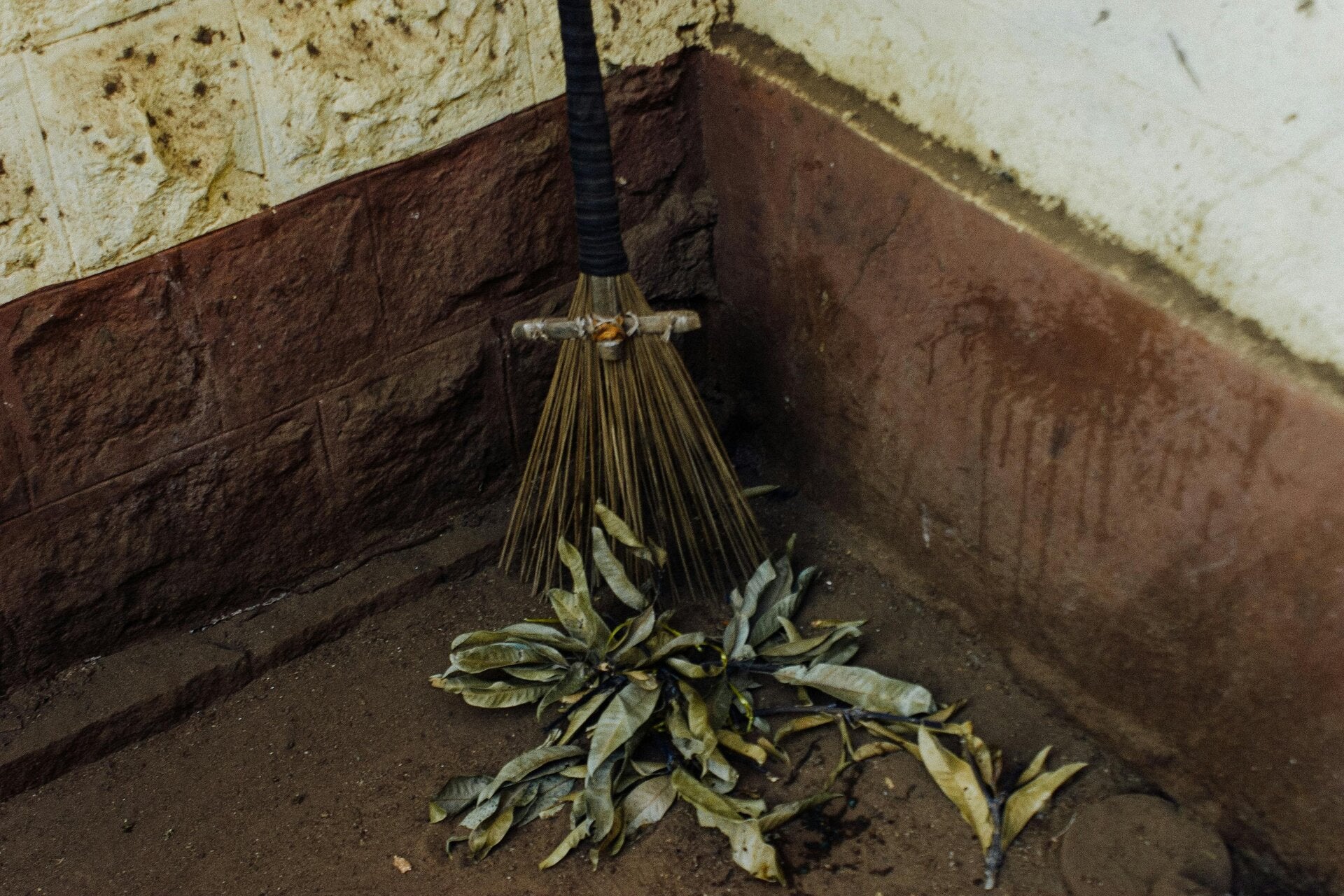
Sweeping Out the Shadows: February Cleansing and its Germanic Roots
In German folklore, February is the bridge between the death of winter and the stirring of spring. Known traditionally as Hornung (the "little antler," referring to deer shedding their antlers or the month being "short-changed"), it is a time of loud celebrations, purification rituals, and weather divination.
As the wheel of the year turns toward early February, there’s a distinct shift in the air. The bone-deep chill of winter remains, but the light is lingering just a few minutes longer each evening. In the Celtic tradition, this is Imbolc—the shift of seasons.
But if you look toward the Germanic and Alpine folklore of the same season, you’ll find a parallel world of Perchten, hearth spirits, and a desperate, ritualistic need to "scrub away" the remnants of the dark half of the year.
The Mid-Winter Sludge
By February, our homes haven't just collected physical dust; they’ve collected "stagnation."
In ancient Germanic tradition, the time between the Winter Solstice and early February was often seen as a period where the veil was thin and the Wild Hunt roamed.
Cleansing wasn't just about hygiene; it was about spiritual boundary-setting. If you didn't clear out the old energy, the blessings of the coming spring wouldn't have a clean place to land.
Frau Holle and the Sacred Broom
In German folklore, few figures are as central to this season as Frau Holle (or Perchta in southern regions).
She is the protector of the hearth and the enforcer of domestic order. Legend says she would enter homes during the winter months to see if the spinning had been finished and the floors swept.A clean house signaled to the Perchta/Frau Holle that the inhabitants were ready for new growth.The broom or besom became a sacred tool. It wasn't just for dirt; it was used to sweep out malevolent spirits that had tucked themselves into corners during the long, dark nights.

Sweeping Out the "Old"
Sweeping was a symbolic act of banishing negativity.
The Direction: You never swept toward the center of the room. You swept from the hearth toward the front door. This physically and symbolically pushed the "dust" of the previous year out of the house.
The Threshold: Special care was taken at the threshold. Once the "winter dirt" was swept out, the broom was often placed upside down behind the door to prevent bad luck from entering.
Cleaning as Prophecy
Rural German folklore often treated the state of the house in February as a "seed" for the rest of the year:
Order vs. Chaos:
If the house was chaotic during the first days of February,
it was believed the harvest wouldbe "tangled" (weedy or poor).
Clear Windows:
Washing windows with vinegar was common as soon as the first thaw hit. This wasn't just for light; it was to ensure a "clear view" (klarer Blick) for the family’s decision-making in the coming year.
The Smudging Rituals (Räuchern)
The word "February" comes from the Latin februare (to purify), and Germans took this literally through smoke.
The Tools: Families would burn bundles of dried herbs—usually juniper, sage and mugwort
The Ritual: The head of the household would carry a smoking pan through every room, the cellar, and especially the stables. The smoke was thought to cleanse the air of Wintergeister (winter spirits) and illnesses.
The Goal: It wasn't just about cleanliness; it was an "energetic" reset to prepare the home for the productive energy of spring.

Add comment
Comments