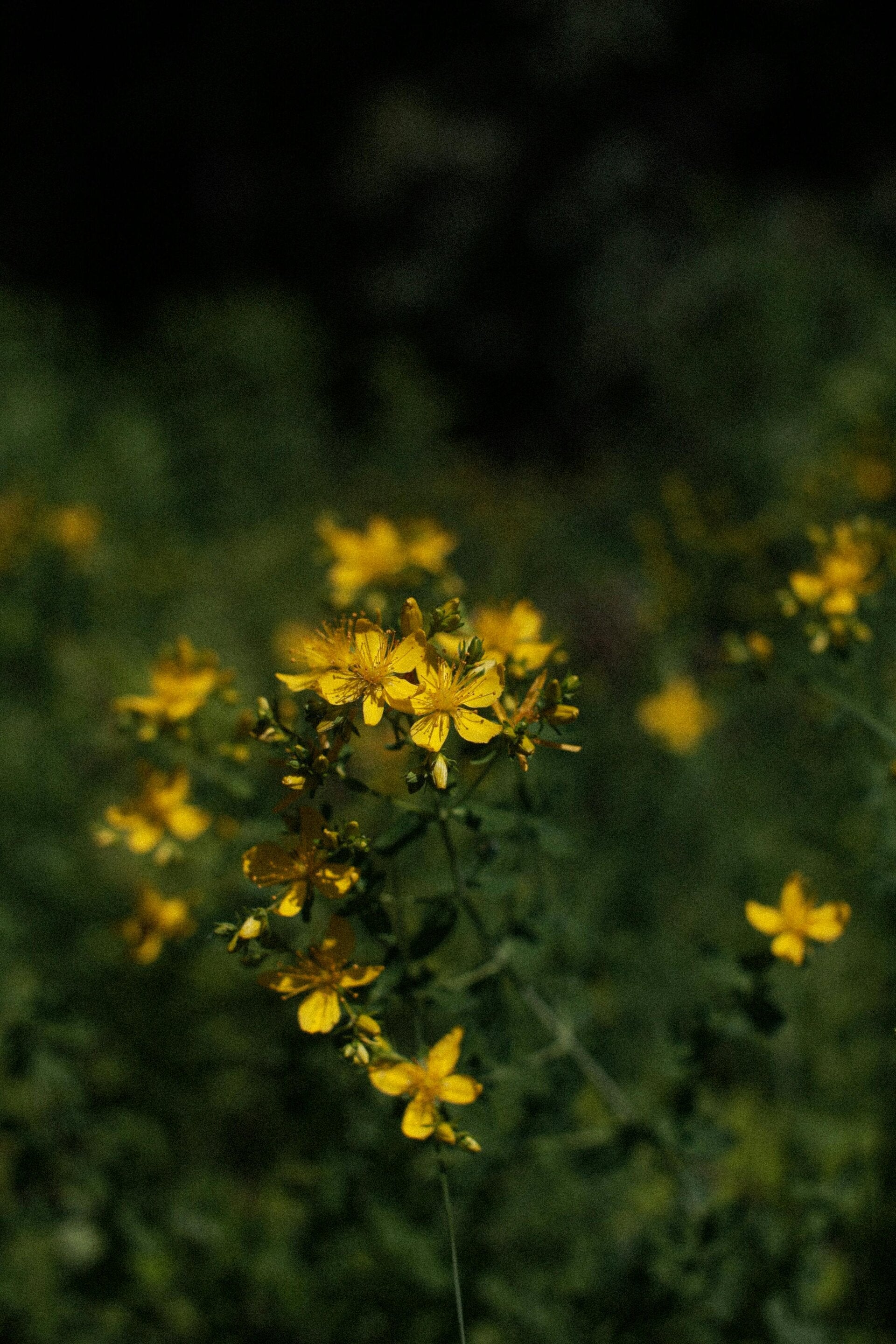
If you walk through the German countryside in late June, you’ll notice the fields and roadsides exploding with a brilliant sun-yellow flower. In modern herbalism we know it as St. John’s Wort (Hypericum perforatum).
In traditional German folklore this plant goes by another name: Johanniskraut, one of the most powerful, multi-purpose magical plants in the Germanic tradition — a literal piece of the sun captured on Earth to ward off darkness.
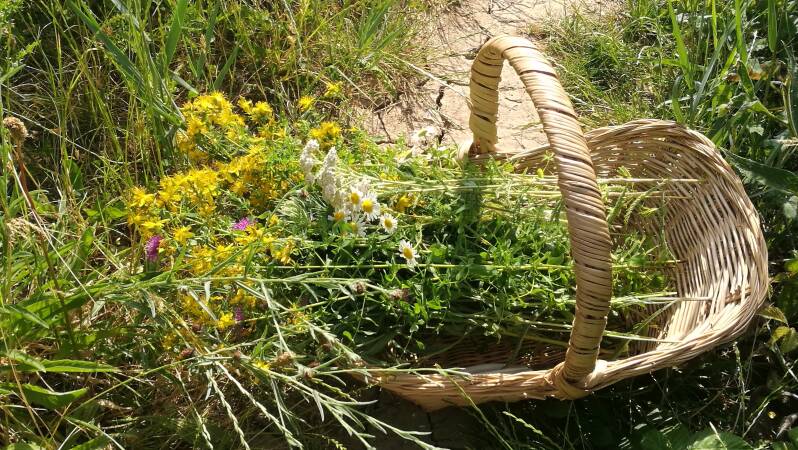
The Solstice Connection: Bringing Light to the Dark
The name Johanniskraut translates to "St. John’s herb" named after St. John the Baptist whose feast day falls on June 24th. However, like many Christian holidays in Germany, this date was intentionally overlaid onto the much older pagan celebration of Sommersonnenwende (the Summer Solstice).
The solstice is the peak of the sun's power but historically it was also viewed as a highly vulnerable, liminal time. Folklore dictated that as the sun paused and the days prepared to shorten the veil between worlds grew thin. Witches, demons and restless spirits were believed to roam the Earth in full force.
Because Johanniskraut blooms precisely at this cosmic turning point ancestral Germans believe the plant absorbed the absolute maximum amount of solar energy. To possess it was to hold a shield of pure light.
The Signature of Blood and Light
Traditional German plant lore heavily relied on the Signatura Plantarum (the Doctrine of Signatures)—the belief that a plant's physical appearance reveals its purpose. Johanniskraut has two striking features that made its magical properties obvious to early practitioners:
1. The Perforated Leaves (Jageteufel)
If you hold a Johanniskraut leaf up to the sky, it looks like it has been repeatedly stabbed with a tiny needle. Old German myths claim that the Devil infuriated by how much power the herb held over evil spirits took a needle and pierced the leaves in a fit of rage to destroy it. Instead, the plant survived, earning the folk nickname Jageteufel (Devil's Chaser).
2. The Red "Blood" (Johannisblut)
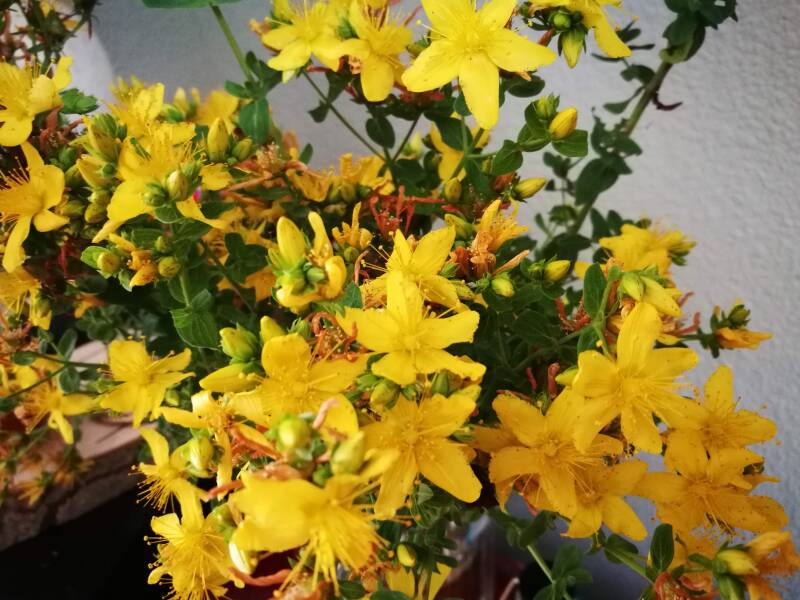
If you crush the yellow buds or flowers between your fingers an intense deep-red liquid stains your skin. Chemically this is hypericin, but to ancient and medieval Germans this was Johannisblut (St. John's Blood). It symbolized life force, sacrifice and absolute protection against the dark. When infused in olive oil, it turns the liquid a deep ruby red—traditionally called Rotöl (Red Oil)—which was used to heal wounds and soothe burns.
Traditional Magical Uses of Johanniskraut
The Solstice Fire Jump:
During Midsummer festivals massive bonfires were lit to honor the sun. The people would weave wreaths of Johanniskraut to wear on their heads or around their waists. They would then jump over the dying embers of the fire throwing the herbs into the flames afterward to burn away bad luck and sickness for the coming year.
-
Thatch-Roof Protection:
-
To protect half-timbered homes from lightning strikes and fires—traditionally blamed on malevolent spirits or angry gods—bundles of Johanniskraut gathered on Midsummer night were hung in the roof beams or tucked under the roof.
-
Warding the Threshold:
-
To keep witches and demons from entering the home the flowers were gathered into small bouquets and hung over front doors, windowsills and stables to protect the livestock.
-
The Silent Midsummer Walk:
-
In some regions young women would walk backward into a field on Midsummer Night, completely silent, to pick the herb. If they managed to find it without speaking a word, they would place it under their pillows to dream of their future spouses.
From Ancient Magic to Modern Medicine
What makes Johanniskraut so fascinating is how beautifully its folklore mirrors the modern scientific application. The ancient Germans used it to chase away the metaphorical darkness of evil spirits and literal seasonal fear. Today clinical science recognizes it as an effective herbal treatment for mild-to-moderate depression—essentially chasing away the internal darkness of a heavy mind.
Whether you view it through the lens of modern pharmacology or ancient lore Johanniskraut remains exactly what our ancestors believed it to be: a vibrant resilient bringer of light.
Add comment
Comments