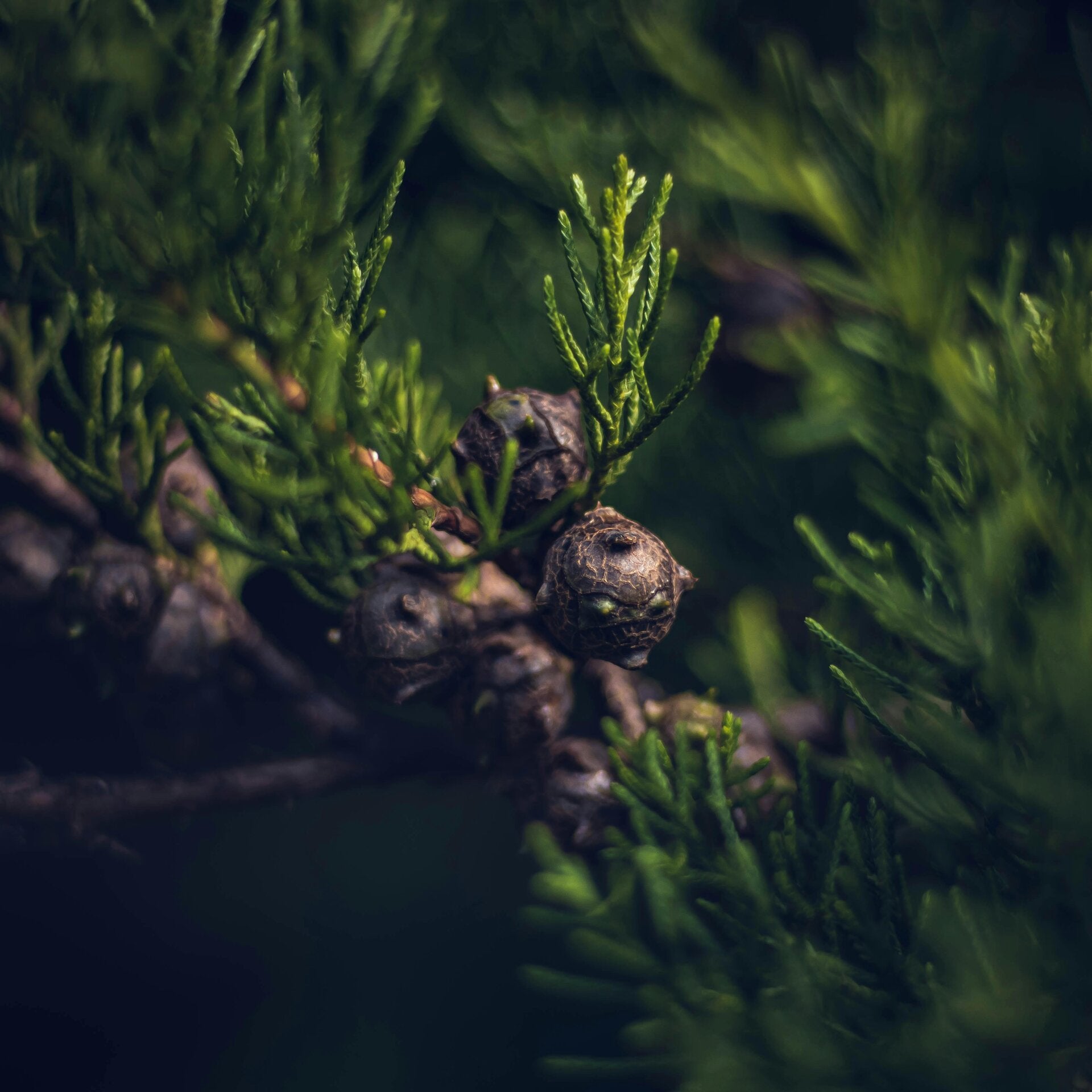
In traditional German folk beliefs Wacholder (Juniper) held a status almost unmatched by any other tree. It was viewed as a living fortress—a plant so fiercely protective, holy and potent that evil spirits and diseases simply could not pass its defense.
In rural Germany juniper was deeply protected by strict taboos and woven into the rhythm of country life from birth to death. Here are the some of the core pillars of Wacholder in German folklore.

1. The Tree with No Shadow (Protection from Lightning and Fire)
In many regions of Germany (such as the Harz mountains and Lower Saxony) it was believed that juniper casts no shadow or that its shadow was sacred and protected by higher powers.
Because of this, juniper was viewed as the ultimate lightning rod and protector against fire. Planting a juniper bush near the corner of a farmhouse or barn was believed to shield the building from being struck by lightning during violent summer or autumn thunderstorms.
People also carried small pieces of juniper wood in their pockets as a personal
talisman against sudden accidents and fire.
2. The Unbreakable Guard Against Evil Spirits
In old folk beliefs witches and malicious spirits (Druden or Mahr) were terrified of juniper due to its sharp needles and intense purifying aromatic oils.
The Needle Trap: Farmers would stick sharp juniper branches into the thresholds of stables, doors and windows. It was believed that if a witch or a malevolent spirit tried to enter they would be forced to stop and count every single tiny needle on the branch. Because they couldn’t finish counting before dawn they were forced to flee.
-
Whips and Switches: Cowherds drove their cattle to pasture using switches carved from juniper wood believing it would protect the animals from being bewitched or losing their milk.

3. The Power of Juniper Smoke (Räuchern mit Wacholder)
Juniper smoke was considered one of the most powerful cleansers in
traditional German folk medicine and magic.
-
Whenever sickness struck a household or livestock fell mysteriously ill the farmer’s wife would take an iron pan (Räucherpfanne) filled with burning dried juniper needles and berries and walk through every room of the house, the cellar and the animal stalls.
-
The smoke was thought to physically and magically disinfect the air, driving out pestilence, bad luck and lingering spirits.
-
This practice peaked during the Rauhnächte (the sacred nights around Christmas and New Year).

4. The Taboo: Never Cut Down a Juniper Unpunished
Because juniper was considered a sacred guardian plant chopping down a fully grown juniper was historically regarded in German folklore as a no-go that brought terrible misfortune.
According to legend, anyone who maliciously cut down a juniper would die within the year
or misfortune would strike their family.
If a juniper unfortunately was used for wood the people would traditionally ask the tree for permission or offer a small token of respect (such as a piece of bread or a quiet word of thanks) before taking its branches.
5. A Marker for the Dead
In some regions (because juniper remains stubbornly green and vibrant even in freezing) it was planted on graves or used in funeral customs. Its evergreen nature symbolized the eternal soul and the endurance of life making it a powerful bridge between the living and the ancestors as the year faded into winter.
Add comment
Comments